Getting your pork recipes right every time
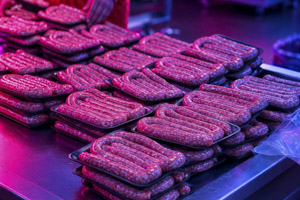
Recipes kept in spreadsheets leave room for human error and outdated costing. When an ingredient runs out, staff can also easily swap in another product, thereby changing both the consistency and the cost of the final product.
Arthur Carruthers, Client Success Advisor at Matrix Software, explains how pork processors keep recipes consistent and cost their products on what actually happened in production.
Why spreadsheet recipes put cost and consistency at risk
“Most processors still manage their recipes using Excel spreadsheets,” says Carruthers.
That means a processor’s bills of materials (BOMs) and costing are recorded in a spreadsheet, apart from the operational systems that oversee production.Each change has to be made by hand in the spreadsheet and then transferred across. Carruthers explains that this manual handling creates room for human error and leaves costing out of date.
The spreadsheet also has no control over what happens on the production floor. If production runs out of an ingredient, there is often nothing to stop staff from using another product instead. That substitution can have a direct impact on the cost and consistency of the final product.
Matrix avoids this by controlling and recording recipes and their costs within the system.
How Matrix traces trimmings back to the carcass
Trimmings come out of the deboning room daily, and they’re an important ingredient in many processed products, particularly sausages.
Matrix lets processors barcode trimmings in specific pack sizes, according to customer requirements. Production then scans those barcodes in as BOM ingredients.
When tracing a trimming barcode, Matrix identifies all the carcasses used for that specific block test on the day. Each carcass can then be traced back to its original slaughter batch. The result is full traceability for the finished product, right back to the slaughter batches it came from.
Two ways to manage a recipe
Matrix records losses and gains throughout production, which includes these stages:
● thawing
● mixing
● filling
● pickling or injecting
● smoking
● cooling
● packing
There are two approaches to managing recipes in Matrix, namely:
● A single-step recipe records all the ingredients up front. Any losses or gains during production show up in the final packed product.
● A multi-step recipe measures each production stage on its own. It calculates the losses and gains at every step, along with the costs that go with them.
“Multi-step recipes provide much better visibility into where losses occur and make it easier to identify the cause of quality issues,” says Carruthers. “For example, if a recipe specifies 30 minutes of cooking but the operator leaves the product in the smoker for 45 minutes, the final product may come out dry.
The extra weight loss also pushes up the cost per kilogram at the smoking stage. When each step is recorded separately, you can see where the problem happened and what it did to the final product,” explains Carruthers.
How a cheese pork sausage moves through a multi-step recipe
Carruthers uses a cheese pork sausage to show how Matrix weighs and records the inputs and outputs at every stage. The percentages below are his example figures.
1. Mixing: trimmings, spek, spices, cheese and water go into the bowl cutter and are mixed into an emulsion. Matrix records every ingredient as an input. A 1% process loss is recorded for emulsion left inside the bowl cutter. The mixed emulsion is labelled and recorded as the output.
2. Filling: the emulsion is scanned in as the input for filling. Additional BOM items, such as casings, are added. The filled sausages are loaded onto a trolley and recorded as the output. A further 1% loss is recorded for product left inside the Handtmann filler machine.
3. Cooking or smoking: the filled trolley becomes the input for cooking. Extra costs, such as woodchips or smoke liquid, are added to the batch. Once cooking is done, the trolley is weighed and relabelled as the output. Cooking is typically the biggest loss in cooked processed products, ranging from approximately 6% to 18%.
4. Cooling: the product is showered and left to cool, and then the trolley is weighed again. A further loss of approximately 1% can be recorded. The cooled product becomes the input for packing.
5. Packing: this stage records the packed product and its packaging. The raw product cost per kilogram carries forward, and the final BOM items are added: base and lidding, labels, vacuum bags and boxes. Matrix then calculates the finished product cost using the actual production figures and packaging costs.
Carruthers says the biggest advantage is that Matrix doesn’t simply calculate a theoretical recipe cost. “It tracks what actually happened during production, including the actual weights, additional ingredients, losses and costs at each stage,” he says.
Carruthers has also explained how tracking yield per batch reveals outdated recipe standards.
Start with a batch record sheet this week
“If you formulate a successful product today, you want it to taste exactly the same 20 years from now,” says Carruthers.
For a processor without a production system, he recommends starting with a standardised batch record sheet for every recipe. The sheet should record:
● the product name and batch number;
● every ingredient used, with its exact weight in kilograms;
● the actual quantities added during production;
● the production date and the operator responsible;
● any substitutions or deviations from the original recipe.
Operators should use the same sheet for every batch and write down any change instead of adjusting the recipe without a record. Keep the completed sheets as a history of production. They create accountability and allow management to compare batches. When you produce a successful product, you also have a documented recipe to make it again.
Frequently asked questions
What is the difference between a single-step and a multi-step recipe?
A single-step recipe records all ingredients up front and shows losses only in the final packed product. A multi-step recipe measures each production stage on its own, so you can see where losses happen.
How can trimmings be traced back to the carcass?
In Matrix, trimmings are barcoded and scanned into production as ingredients. Tracing a trimming barcode identifies the carcasses it came from, and each carcass can be traced back to its slaughter batch.
Where does a cooked sausage lose the most weight?
According to Carruthers, cooking is typically the biggest loss in cooked processed products, ranging from approximately 6% to 18%.
What should a batch record sheet include?
The sheet should list every ingredient with its exact weight, and the actual quantities added during production. Record any substitutions or changes on it as well.
Talk to a Matrix specialist
Matrix can record the actual weights and costs at each stage of a recipe. To find out how this would work in your operation, speak to a Matrix meat processing specialist.
