On the Cutting Edge – know your cutting solutions.

This series explores a range of cutting solutions, focussing on the key elements in blade design and how they affect the performance of your knives.
A series with Mikko Brunner, M.D. – Renlaw Industrial Engineering
Part 1 – Blade Steel Composition
Steel is an alloy (mixture) of iron, carbon, and other elements.
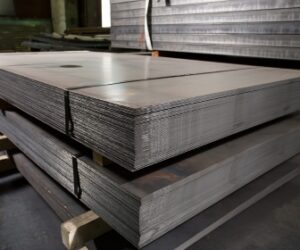
The carbon content in typical steel alloys may contribute up to 2.2% of its weight. A steel’s qualities are controlled and enhanced by varying the amount of carbon and other alloying elements in it. These qualities include such things as the hardness, strength, and resistance to corrosion of the resulting steel. The enhancement of a steels’ characteristics is only possible by adding alloying elements.
The carbon content of steel is between 0.002% and 2.2% by weight for iron-carbon alloys. This varies depending on other alloying elements that have been used, such as manganese, chromium, nickel, tungsten, and so on.
The following terms are used in metallurgy (the science of metals and their properties) and it is important to understand the distinctions between them:
• Hardness – the measure of a material’s resistance to scratching and indentation.
• Toughness – the measure of a material’s ability to withstand bending, stretching or other deforming forces without cracking.
• Strength – the measure of the ability of a material to resist deformation.
• Critical temperature – the temperature at which the varying alloying elements mix to form the hard structure of martensite.
For example: Glass is harder than rubber, but when a force is applied to both materials, glass will shatter and rubber will not. Therefore, we can say that rubber is tougher than glass.
As another example, if one takes a strip of wood and a piece of rubber with the same dimension, it will be a lot easier to bend the rubber – because the wood is stronger, but, if you bend it past a certain point, the piece of wood will break, but the rubber will not, because the rubber is tougher than the wood.
Some common alloying elements and their effect on steel:
 • Chromium: A key component of stainless steels. At over 11% content, chromium significantly improves corrosion resistance. Chromium also improves hardenability, strength, response to heat treatment and wear resistance.
• Cobalt: Improves strength at high temperatures.
• Manganese: Increases strength at high temperatures. Manganese also improves hardenability, and wear resistance.
• Molybdenum: Found in small quantities in stainless steels, molybdenum increases hardenability and strength, particularly at high temperatures.
• Nickel: Nickel increases strength, while also improving resistance to oxidization and corrosion. It also increases toughness at low temperatures when added in small amounts. Nickel is an essential component in steels that are used in sub-zero temperatures, as it increases the steel’s resistance to cracking at low temperatures.
• Tungsten: Produces stable carbides which increases hardness, particularly at high temperatures.
• Vanadium: Vanadium can produce stable carbides that increase strength at high temperatures. By promoting a fine grain structure, the ductility (stretchiness) of the steel can be retained.
Standard knife steels have a combination of these, and other elements, designed to produce the ideal mix of strength, wear resistance, toughness, corrosion resistance, and of course cost. These alloying elements are pricey, so it’s important to choose the exact right fit for your application. The Renlaw team has extensive understanding behind the science of metallurgy – which means we can advise you on the best possible steel blade for your specific needs.
Learn more about your blade steels in the coming edition, where we look at the hardening process and how it affects a blades performance, or visit www.renlaw.co.za to look at our blog.

