Refrigeration and cooling sytems in the Meat Industry – Keeping your cool.
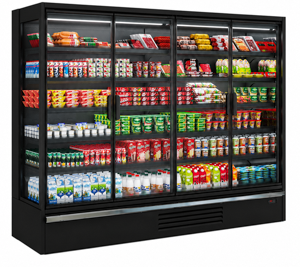
Refrigeration and cooling sytems are crucial in the Abattoir, Butchery and Meat Processing industries and the requirements are legislated by the Health Act and various other standards including HACCP and SANS.
Keeping products chilled or frozen in an abattoir, butchery or in transit is imperative to ensure food safety and to comply with the many food safety laws and regulations.
With the rising cost of electricity in South Africa, combined with our hot climates and poor building insulation, cost-effective solutions are increasingly in demand, particularly for walk-in refrigerators and processing areas, where maintaining the temperature in a large area can be challenging.
The National Health Act, Act 61 of 2003 amended to ( The National Health Amendment Act 12 of 2013) in the requirements as set out in the Regulation R638 – prescribes that all food specified must be kept at a core temperature as described in the table below during the storage, transport or display thereof and specifies that no food shall be sold if the core temperature thereof is higher than the required core temperature or the surface temperature thereof is more than 2°C higher than the required core temperature.
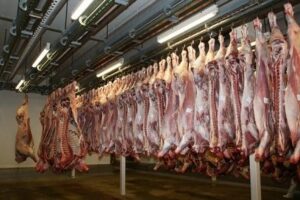
In addition, “every chilling and freezer facility used for the storage, display or transport of perishable food shall be provided with a thermometer which at all times shall reflect the degree of chilling of the refrigeration area of such facility and which shall be in such a condition and positioned so that an accurate reading may be taken unhampered.”
Likewise, the Red Meat Regulations within the Meat Safety Act (Act 40 of 2000) requires that:
• The air temperature of a room where meat is cut and packed must be maintained at or below 12°C.
• During cutting, wrapping, portioning and packing the core temperature of unfrozen meat must be maintained at or below 7°C.
• Meat that is packed for freezing must be placed in a freezer within one hour of being packed. The freezer must be capable of reducing the temperature of the meat to at least minus 12°C within 24 hours and must thereafter be maintained at or below that temperature.
• Frozen meat may not be dispatched at core temperatures higher than minus 12°C.
- Complying with HACCP (Hazard Analysis Critical Control Point) requirements also guides butcheries in terms of the refrigeration and freezing standards. HACCP requires that critical hazard points are identified along every stage of food production, processing or preparation, and that the related risks are assessed, and effective control procedures are implemented. Of course, meat that is not kept at the right temperature is a significant hazard, and there are several control points where the risk of not maintaining the correct temperature is significantly increased.
 These include delivery, storage, processing, packaging and display. As just one brief example, when receiving fresh meat, it should be checked that the food products comply with the required temperatures, using a temperature probe. These temperatures should be recorded on a HACCP Temperature Control Sheet, along with the time of delivery and the time of storage.
The meat should be stored at 3 – 5ºC within 10 minutes of removal from the delivery vehicle. The same applies to frozen goods, but these must be stored at -18ºC within 10 minutes of removal from the delivery vehicle.
In terms of the storage, the temperature of the products, as well as efficiency of the refrigeration equipment, should be monitored continuously, whether a cold room, a processing room or a display cabinet. In addition, monitoring the shelf life of products is critical – for example, in a frozen state, hamburger patties have a shelf life of three months, but bacon has a shelf life of just one month.
FREEZER & CHILLER DISPLAY CABINETS
Refrigerated retail display cabinets are the unsung heroes of modern food and beverage retail, striking a vital balance between fresh food preservation and high-impact visual marketing. Found in every supermarket, convenience store, café, butchery, deli and commercial kitchen across the globe, these specialized units keep perishable products within safe temperature thresholds while strategically maximizing product visibility to drive sales.
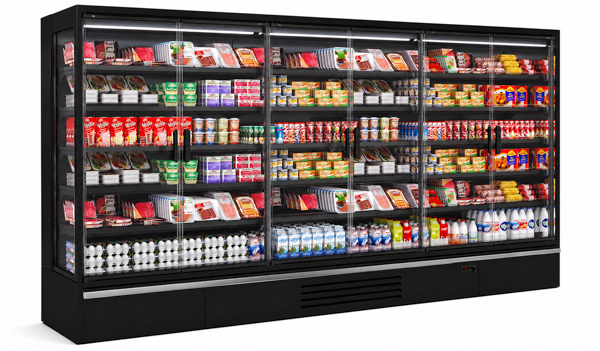
At their core, refrigerated display cabinets are designed to maintain product quality by preventing spoilage. Unlike standard commercial cold storage rooms or solid-door reach-ins hidden in the back-of-house, display cabinets feature clear glass panels, multi-tier glass shelving, and integrated low-heat LED lighting. This configuration lets customers scan inventory easily, transforming essential cold storage into an active sales driver
Diverse Configurations for Different Business Needs
Commercial establishments select display configurations based on store layout, product lines, and service styles:
- Multidecks and Open-Air Cabinets: Featuring an open front protected by a continuous invisible air curtain, these high-accessibility vertical shelves are standard in supermarkets for dairy, fresh produce, and grab-and-go meals.
- Glass-Door Upright Coolers: Designed with insulated glass doors, these space-efficient units are popular for drinks and pre-packaged foods in narrow aisles, significantly lowering running costs.
- Serve-Over Counters and Deli Cases: Built with transparent front panels, these allow deli operators, butchers, and fishmongers to present raw ingredients safely while serving customers across a flat counter surface.
- Countertop and Point-of-Sale (POS) Units: Highly compact and portable, these smaller display refrigerators sit on or near checkout counters to capture last-minute impulse buys.
Maintaining the right temperature is good practice and will reduce costs by minimising wastage. “Good temperature control will reduce bacterial growth and improve shelf-life”.
Recommendations that exceed the regulatory requirements:
- Refrigerate trimmings immediately and bring temperature down to 0-2°C
• Processed products should be handled as quickly as possible and refrigerated without delay
• Temperatures in cutting areas should not exceed 10°C
• Refrigerator temperatures should never exceed 3°C
• Always arrange the cold rooms on a “first in-first out” basis
In the hot South African climate, adhering to these regulations and suggestions are a tall order indeed. It highlights the fact that butcheries and meat processors simply cannot make the grade without the assistance of reliable and reputable companies that specialise in providing refrigeration solutions to the industry.
For the industrial freezing of food blast freezing, contact freezing and cryogenic freezing are used.
Blast freezing in a tunnel is suitable for a wide range of goods – packaged and unpackaged, and regularly or irregularly shaped. Contact freezing is mainly used for the freezing of block items. The cryogenic method involve products to be frozen being dipped into liquid nitrogen (-196 °C) or liquid carbon dioxide (-78 °C). Cryogenic freezers have an extremely fast freezing rate.
It is crucial that a butcher partners with a company that not only has the best, reliable equipment, but will be able to provide the butcher with information and advice that will allow them to make the right decision regarding the appropriate chilling and freezing technology, taking factors such as cost and practicality issues within the butchery into account.
Fortunately, there are many refrigeration, cooling and freezing solutions providers who have proven their mettle in the industry and are making it possible for butcheries and meat processors to comply with the regulations and reap the benefits of having efficient and effective cooling systems to ensure food safety and maximum shelf-life, while also reducing operating costs and wastage.
For all your Refrigeration and Display Solutions contact Concord Retail Solutions.
CONCORD RETAIL SOLUTIONS

Concord Retail Solutions: Refrigeration and Display Solutions for Modern Butcheries
In a butchery, the quality of the meat matters, and so does the way it is displayed. From an inviting serve-over counter to a well-organised self-service section, the right equipment helps retailers present their products with confidence while supporting efficient daily operations.
Concord Retail Solutions is one of South Africa’s leading manufacturers and suppliers of refrigerated retail display cabinets and complete retail solutions. Serving the industry since 1969, the company combines local manufacturing experience with selected international equipment to meet the needs of independent butcheries, supermarket meat departments and larger retail operations.
Concord’s offering brings together chilled, frozen and heated display cabinets, self-contained refrigeration, Clear Vision PET Doors and shelving. This gives meat retailers access to complementary solutions for their sales floor, whether they are opening a new store, upgrading existing equipment or expanding their product offering.
Concord’s Latest Energy Efficient Plug-In Cabinet Range: A Valuable Addition to the Butchery Floor
An important part of Concord’s offering is the Nurdil BIGA self-contained upright display range, bringing a practical refrigeration option to butcheries looking to develop or expand their chilled self-service sections.
 For retailers merchandising prepacked meat, an upright display provides space to organise different cuts, pack sizes and product lines in a format customers can browse easily. The BIGA range complements traditional serve-over counters, allowing a butchery to combine personal service with convenient self-service shopping.
Its self-contained refrigeration format also makes it a valuable option to consider when planning additional display capacity. Cabinet selection and positioning can be matched to the store’s product requirements, available space and operating conditions.
Nurdil’s BIGA plug-in offering includes cabinets intended for dairy and packed meat, with features focused on product visibility, flexible shelving, energy-efficient operation and maintenance access. These are relevant considerations for butcheries balancing presentation with the practical demands of daily trading.
From Service Counters to Self-Service Displays
Every butchery has its own merchandising requirements. A serve-over cabinet creates a focal point for assisted sales, while chilled self-service cabinets give customers convenient access to prepacked products. Freezer displays accommodate frozen ranges, and heated cabinets support outlets offering hot food.
Concord’s cabinet range allows these different formats to work together within one retail environment. Shelving completes the offering, creating organised displays for complementary products such as spices, sauces and other butchery essentials.
Efficiency, Reliability and Ongoing Support
For meat retailers, choosing equipment means considering more than its initial purchase price. Energy consumption, suitability for the intended products, service access and ongoing support all influence its value over time.
Concord places emphasis on refrigeration efficiency, continually developing and testing its cabinet designs. Combined with its after-sales and spare-parts offering, this supports retailers looking for equipment backed by a long-term supplier relationship.
Concord’s Product Offering Includes:
- Nurdil BIGA self-contained upright display cabinets
- Remote chiller and freezer display cabinets
- Serve-over and self-service display cabinets
- Self-contained plug-and-play display cabinets
- Low multideck cabinets
- Hot food display cabinets
- Clear Vision PET Doors
- Retail and cold room shelving
- Bulk racking
- Accessories and spare parts
By combining locally manufactured cabinets with complementary imported ranges such as Nurdil BIGA & Fricon Imported Freezers, Concord Retail Solutions helps butcheries create practical, attractive retail spaces built around their products, customers and operational needs.
